What is xiangqi?
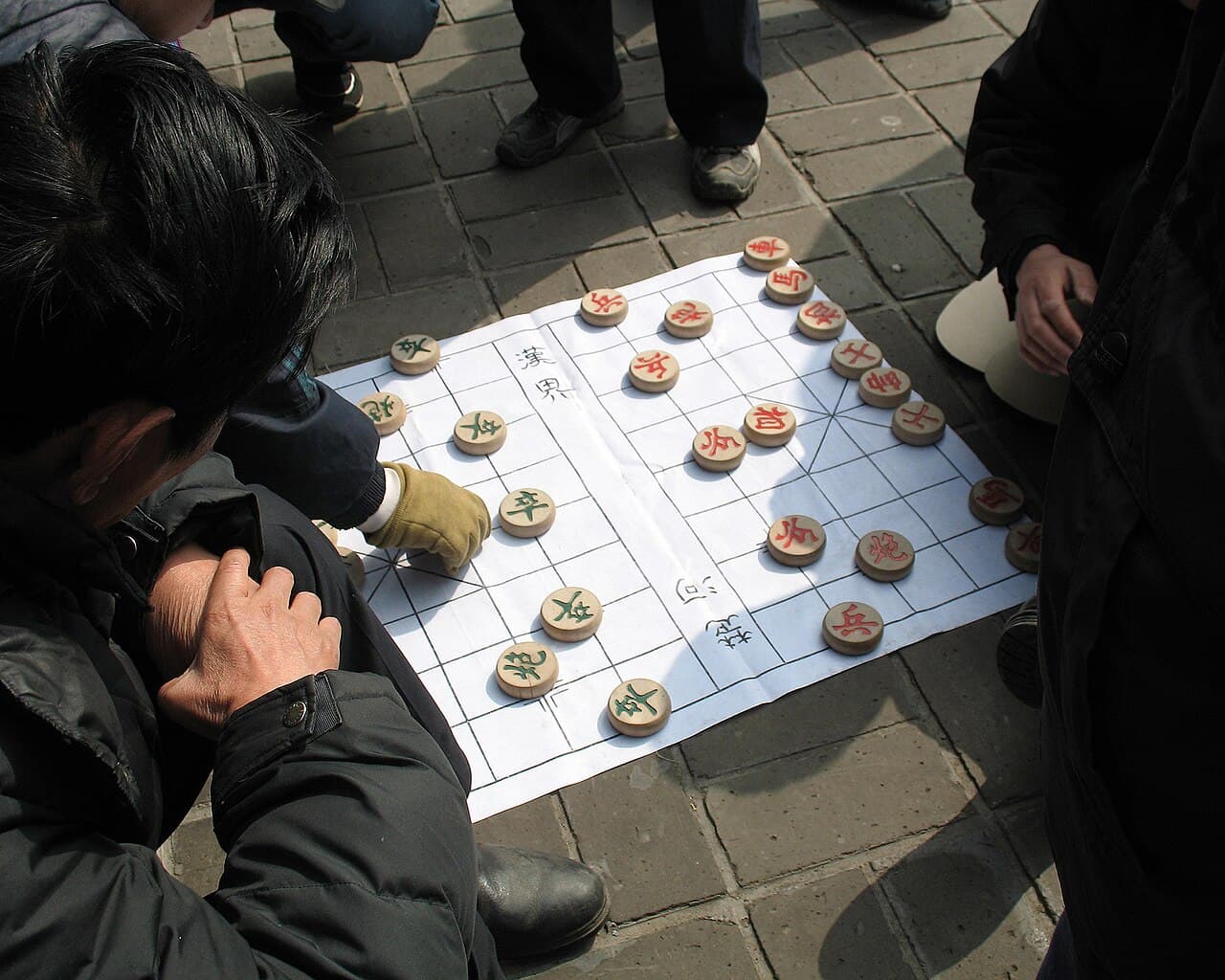
Xiangqi — Chinese chess — is a two-player strategy game and one of the most played board games in the world. Two armies, Red and Black, face each other across a river; the first player to trap the enemy general wins. It shares ancient ancestry with international chess, but its open board, the leaping cannon, and the palace-bound general give it a faster, more tactical character.
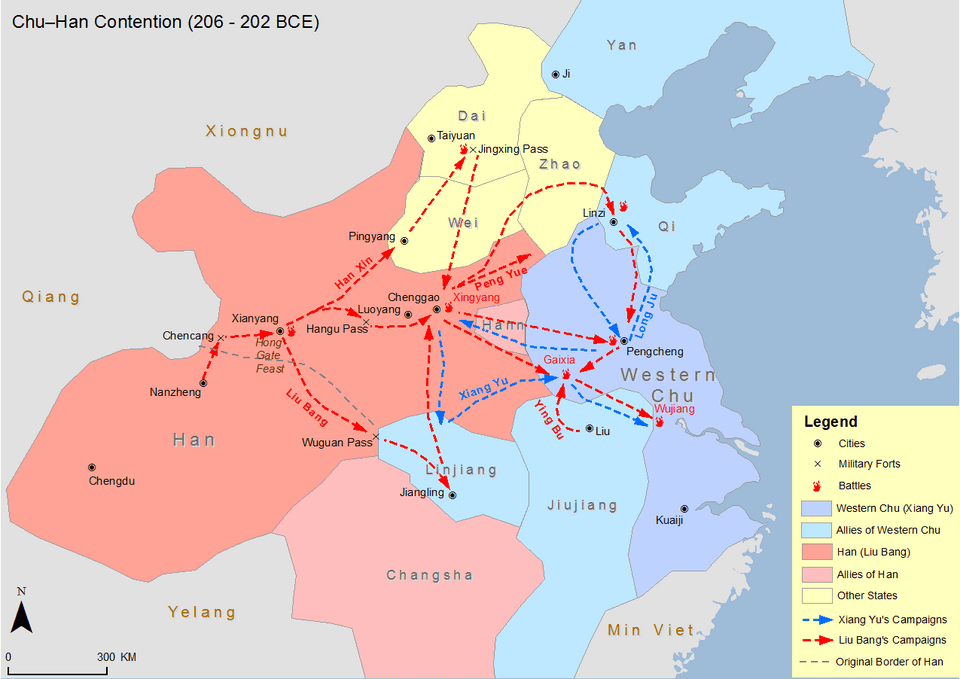
The words carved into the river of every xiangqi board — 楚河漢界, "the Chu River and the Han Border" — commemorate a real war. When the Qin dynasty collapsed in 206 BC, two rivals fought for the empire: Xiang Yu 項羽, the aristocratic Hegemon-King of Western Chu, and Liu Bang 劉邦, the peasant-born King of Han. Their struggle, the Chu–Han Contention, is one of the founding dramas of Chinese history.
At the war's deadlock the two sides agreed to divide the empire along the Hong Canal, near present-day Zhengzhou — everything west to Han, everything east to Chu. The truce did not hold: Liu Bang pressed east, Xiang Yu fell at Gaixia, and the Han dynasty was born. The xiangqi board stages that confrontation forever — two armies, one river, and a truce that every game breaks.
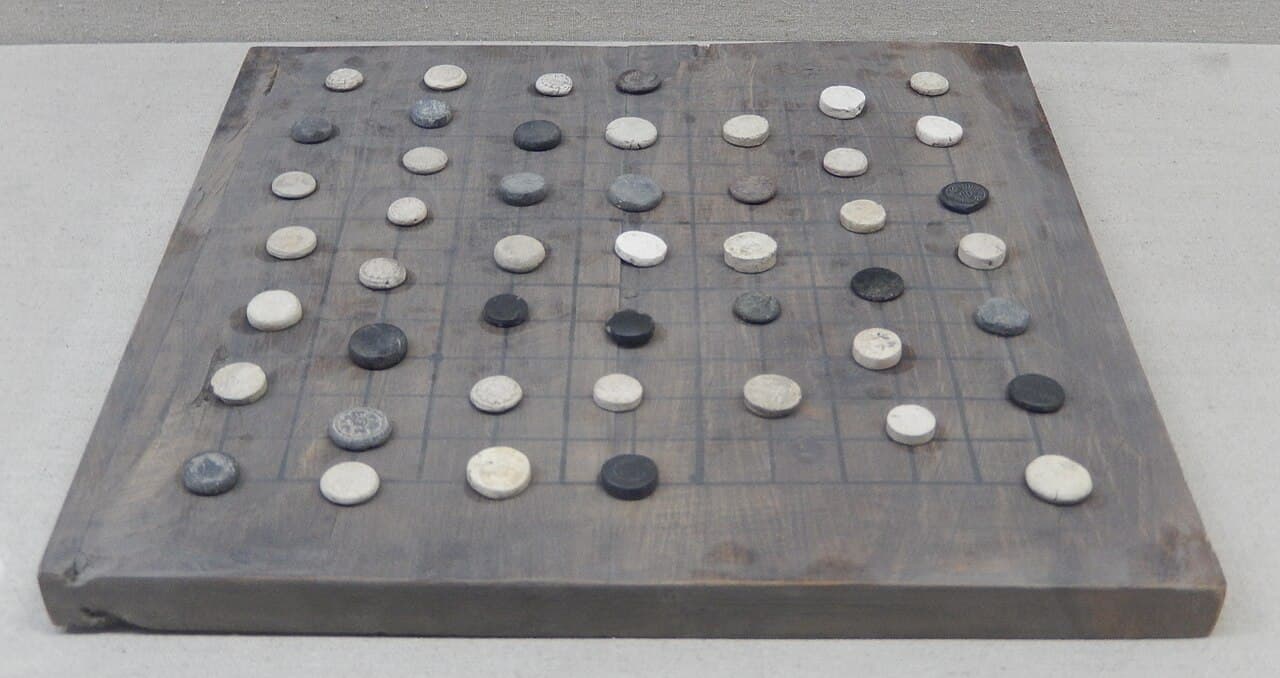
Ask where xiangqi comes from and you step into one of the longest-running debates in the history of games. The name — 象棋, the "elephant game" — appears in Chinese texts more than two thousand years old, though the pastime those early writers described was not the game played today. One school of thought traces xiangqi, like international chess and Japan's shōgi, to a common ancestor that travelled the trade routes out of India and Persia; another argues for a native lineage descending from the older strategy games of ancient Chinese courts. The truth is probably a braid of both: a travelling idea, reshaped by a civilization that already loved the board.
What is certain is that by the Tang dynasty, more than eleven centuries ago, a recognizable ancestor existed. Tang-era stories describe miniature armies — generals, horses, chariots — doing battle across a board: chess in all but final form. The game these tales record was already a pastime of scholars and soldiers alike, portable enough for a garrison and refined enough for a study.
It was under the Song dynasty (960–1279) that xiangqi settled into the shape it holds today. The board became a grid of nine files and ten ranks with the pieces standing on the intersections; a river divided the two camps; each general withdrew into a three-by-three palace. Most tellingly, the game gained the cannon — a piece that captures by leaping over a screen, and a child of the same age that gave China gunpowder. Printed manuals began to circulate, and the game seeped into every layer of society, from the teahouse to the imperial court.
The centuries that followed turned play into scholarship. Ming and Qing masters compiled the classical manuals — works such as the Secret in the Orange and the Plum Flower Manual — whose opening traps and endgame studies are still memorized by serious players today. Xiangqi became China's street game: played on stone tables in parks and upturned crates in markets, the clack of its pieces part of the sound of everyday life.
The twentieth century made it a sport. China recognized xiangqi as an official competitive discipline in the 1950s and began crowning national champions; professional masters and formal titles followed. The World Xiangqi Federation, founded in 1993, organizes world championships today, and the game is played passionately across Vietnam, Southeast Asia, and diaspora communities on every continent.
Xiangqi has since moved online without losing its soul. The same game once cut into Song-dynasty woodblocks is now played millions of times a day — rated, timed, and streamed — by players who may not share a language but share a board. That thousand-year conversation is what you join when you make your first move.